
Which van delivers the most capable work setup for fleets around Oklahoma City, OK: 2026 Mercedes-Benz Sprinter Cargo Van or 2026 Ford Transit?
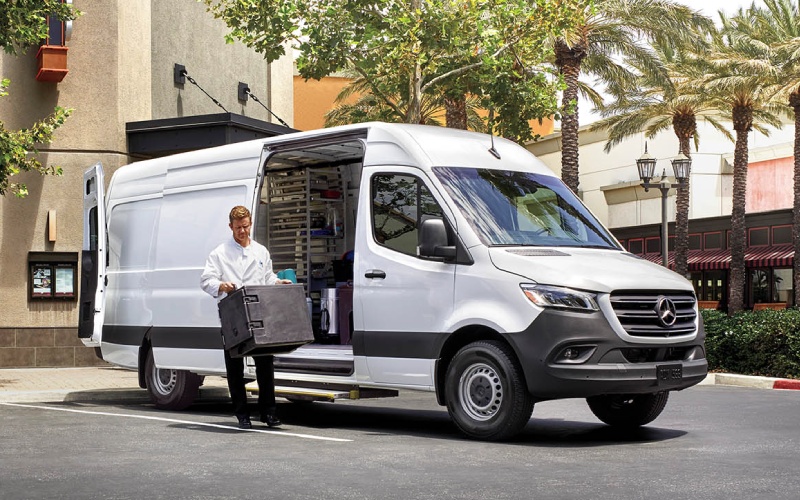
Mercedes-Benz of Oklahoma City – Which van delivers the most capable work setup for fleets around Oklahoma City, OK: 2026 Mercedes-Benz Sprinter Cargo Van or 2026 Ford Transit?
Choosing the right cargo van usually comes down to real-world capability: power that feels relaxed with a full load, smart tech that cuts down on driver fatigue, and a body that accepts upfits without headaches. If you’re debating the 2026 Mercedes-Benz Sprinter Cargo Van and the 2026 Ford Transit for work around Oklahoma City, OK, this guide focuses on one question we hear constantly: which van gives fleets the stronger, more future-ready work setup? We’ll unpack powertrains, traction, interior tech, cargo packaging, and the features that ease life on high-traffic routes and tight docks. Our goal is to help you make a confident, apples-to-apples decision.
Powertrains are the backbone of uptime. The Sprinter’s available 2.0L turbo-diesel four-cylinder—offered in Standard Output and High Output tunes—teams with the 9G-TRONIC automatic to deliver steady, low-rpm torque and calm shift logic. That combination matters when you’re nudging a loaded van through construction zones or easing into a steep driveway with shelves installed. Transit counters with a 3.5L V6 or 3.5L EcoBoost V6 and a 10-speed automatic, which bring solid acceleration and a familiar feel. The differentiator is diesel. If you prefer diesel’s pull and efficient lugging under load, Sprinter is your choice. The Sprinter also lets you pair AWD with diesel—useful when job sites add mud, sandy pull-offs, or a quick downpour to the day’s complexity.
Cabin tech that frees up attention
Tech should simplify, not distract. The Sprinter’s available MBUX Multimedia System with a 10.25-inch touchscreen integrates navigation, voice control, and Mercedes me connect so drivers and operators get clear directions and timely vehicle data. Transit’s SYNC 4 system is capable and features a large display; if you value a refined voice assistant and a cohesive ecosystem aligned to commercial use, MBUX is a meaningful advantage.
Work vans are rolling workshops and mobile offices, so packaging matters. The Sprinter offers multiple wheelbases and roof heights, including a 170-inch Extended body, to accommodate longer materials, multi-row shelving, and taller partitions. Transit’s body range is broad, but if your layouts often force awkward diagonals or require trimming materials to fit, the Sprinter’s extra linear space can be a schedule-saver. For upfits, flat interior walls and a robust accessory ecosystem make the Sprinter a clean canvas.
Safety and confidence in busy corridors
Safety tech has become non-negotiable. The Sprinter brings standard Active Brake Assist and available systems like Blind Spot Assist, Attention Assist, Active Lane Keeping Assist, a 360-degree Camera, and Active Distance Assist DISTRONIC. These features help reduce surprises on crowded arterials, school zones, and hospital corridors. Transit supplies Ford Co-Pilot360 with lane keeping and automatic emergency braking, and it’s a capable suite. Drivers who cover long distances may favor the Sprinter’s smooth adaptive cruise behavior and the way camera views simplify tight parking and alley entries.
As fleets evaluate durability, the conversation inevitably turns to long-term fit. Teams that value diesel torque, consistent shift programming, and packaging that supports complex upfits usually lean Sprinter. Crews prioritizing gas familiarity and a punchy V6 may be satisfied with Transit. Both vans are proven, but the Sprinter’s diesel-AWD pairing and 170-inch Extended configuration tilt the capability scale for demanding routes and diverse cargo.
How this plays out for route planning
Imagine a contractor shuttling between midtown job sites, supply houses, and a subdivision on the edge of the metro. With Sprinter’s diesel torque and 9G-TRONIC, rolling starts feel measured and calm, even with extra bins and a mounted compressor. The available 360-degree Camera reduces the stress of threading into alley docks, and the Wet Wiper System keeps the windshield clean when spray from a nearby site coats the glass. Those small wins add up to easier days and cleaner ETA accuracy.
- Cargo flexibility: 170-inch Extended configuration, tall roof pairing, and flat walls make long items and multi-shelf builds straightforward.
- Driver support: Available Active Distance Assist DISTRONIC and 360-degree Camera reduce fatigue and make tight spaces feel larger.
- Traction options: AWD available with diesel helps maintain momentum on gravel, mud, or slick on-ramps without sacrificing diesel benefits.
From a fleet manager’s perspective, consistency is priceless. The Sprinter’s powertrain behavior, assistance tech, and upfit-friendly dimensions make it easier to replicate successful builds across multiple vans. That means simpler training, fewer surprises, and fewer one-off workarounds. It also means less time wrestling with cargo layouts that barely fit or powertrains that hunt for gears at the worst moments.
Frequently Asked Questions:
Does the Sprinter offer more upfit flexibility than the Transit?
Both offer strong upfit potential, but the Sprinter’s 170-inch Extended configuration, high-roof options, and flat interior panels often create easier layouts for longer materials and multi-tier shelving builds.
Can I get diesel and AWD together on these vans?
On the Sprinter, yes—AWD is available with the turbo-diesel. Transit offers AWD, but not with a diesel powertrain.
Which van’s driver-assistance tech is better for tight city work?
Both are capable, but Sprinter’s available 360-degree Camera, Blind Spot Assist, and Adaptive Cruise via Active Distance Assist DISTRONIC integrate smoothly with MBUX to create a calm, informative cockpit in dense traffic and tight lots.
If you’re mapping out your next build, one visit and a hands-on demo will clarify the differences quickly. Mercedes-Benz of Oklahoma City can walk through configurations, tech packages, and upfit pathways that match your routes and payloads while serving Oklahoma City, Yukon, and Norman with knowledgeable guidance and support. For many teams, the combination of diesel torque, AWD availability with diesel, and thoughtful packaging makes the Sprinter the more capable workhorse over the long haul.
0 comment(s) so far on Which van delivers the most capable work setup for fleets around Oklahoma City, OK: 2026 Mercedes-Benz Sprinter Cargo Van or 2026 Ford Transit?